TRAVEL ADVISORY: It is not recommended to travel to Israel and Palestine at the moment for safety reasons. Please refer to your country’s official site for travel advisories.
Thank you for reading this post, don't forget to subscribe!
I actually spent three months between Israel and Palestine focused on its tourism industry. I’ve met many people visiting from all over the world and helped lots of them plan their trips. I can confidently say that 14 days in Israel is an ideal time to spend here.
Setting foot in Israel, you’re not just arriving at another holiday destination but stepping into an interesting history, culture, and natural beauty. Israel presents an ideal setting for an exciting 14-day trip, with its diverse landscapes, remarkable heritage sites, and the lovely cities of Jerusalem and Tel Aviv.
Getting dressed and heading to the sun-soaked coastal stretches, exploring the Negev desert, or learning about the history Western Wall, the possibilities are endless. The trip is also extended into Palestine, which offers its own unique blend of history, tradition, and warm hospitality.
In this 2 weeks in Israel and Palestine travel guide, I will show you three different travel itineraries that you can choose from. Whether it’s your first time here, you want to see a mixture of history and culture, or you want to focus on a religious trail, there’s something for everyone.
ALSO READ: Explore Petra by spending 2 weeks in Jordan
BASIC TRAVEL INFORMATION FOR ISRAEL AND PALESTINE
Here are the basic yet very important things you should know about visiting Israel and Palestine to make sure you will have a great time and a hassle-free trip. The following information will help you plan and write your perfect 2-week travel itinerary.
When is the best time to travel to Israel and Palestine
The best time to visit Israel is spring (April-May) and autumn (September-October) when the weather is pleasant and the crowds are thinner. The peak season typically falls between June and August, with hot weather and larger crowds, especially in popular tourist destinations.
December is also one of the busiest times of the year since many religious holidays happen during this month.
From November to March, the low season offers cooler weather and fewer tourists but can be disrupted by occasional rainfall. Travelling during the Jewish holidays, particularly Rosh Hashanah (usually in September) and Passover (March-April), is the least ideal due to high prices, large crowds, and many businesses being closed.
Are 2 weeks enough for Israel and Palestine
Yes. The more time, the better, of course. But having limited time, such as 14 days, is still doable. The country is small, and the transportation is quite reliable. Hence, getting from one place to another shouldn’t be too challenging.
Plan to see 3-4 cities only. Keep in mind that many top sites are usually only a few hours’ drive from a major city. Let’s say you’re planning to see Bethlehem, you can easily get there from Jerusalem or Ramallah, which can be done as a day trip.
How to get around
Buses and minivans are the most common public transportation in Israel. A metro or train in Tel Aviv from the airport is quite good and affordable. Regarding ride-hailing apps, you can use Gett or Moovit. Taxis are also available throughout the country but are not the most affordable choice.
Language and currency
The official language of Israel is Hebrew, and the Arab community widely speaks Arabic. However, English is extensively used and is a mandatory subject in schools. As a result, most Israelis have a good command of English, particularly in urban areas and tourist destinations.
Street signs, restaurant menus, and other public notices are often in Hebrew, Arabic, and English, so English-speaking tourists generally have no issues navigating or communicating.
The Israeli Shekel (ILS) is the official currency of Israel, while Palestine uses both the Israeli Shekel and Jordanian Dinar (JOD). Major foreign currencies aren’t typically accepted for everyday transactions.
However, ATMs are widely available in both regions, accepting international bank cards for cash withdrawals in local currency. Paying with a bank card is common. However, carrying some cash is advisable as smaller establishments might not accept cards.
What to pack
Israel and Palestine are both in the Middle East, surrounded by the desert. Because of this, it’s vital to pack versatile clothing that is comfortable during a hot day, and warm enough for the evening. Since there are lots of sacred places here, it’s important to pack modest clothes.
Make sure you have a scarf to cover your head, long and breathable pants that cover all the way to the knees or even longer, and long sleeve shirts. It’s crucial that your shoulder, legs, and head are covered.
During my trip, I bought a sarong which turns into a skirt, a lightweight scarf for my head, and an oversized summer dress shirt. When it comes to footwear, bring something that is comfortable for long walks, but easy enough to remove and wear back on.
Visa
With Israel and Palestine’s political situation, the visa regulation can be a bit blurry. If you’re entering by air, you’re landing in Tel Aviv. Israel issues visa-free to many nationalities.
If you hold a passport from most North and Latin America, Europe, and Oceania countries, you can enter and stay in Israel for three months without a visa. The same applies to South Korea, Japan, the Philippines, South Africa, Botswana, Malawi, and the UAE.
Travellers holding a passport from Arab countries are either not allowed entry to Israel or require special permission to travel here.
Israel also has stopped stamping the passports of its visitors due to Arab countries denying entry to a foreign visitor with a stamp from Israel. Instead, Israel gives a visa card to its tourists.
However, travelling between Israel, Palestine, and Jordan as tourists is not a problem. Occasionally, soldiers board a bus on the border to check passengers’ passports. So, always bring your passport and visa card when travelling between these three countries.
You can extend your visa at the immigration office. However, you will be asked extensively to explain why you need a visa extension. First-time visitors to Israel should also be prepared for surprise inspections at the airport, especially for a solo traveller. Your luggage might be inspected, and you will be interviewed about your trip.
Cost of 2 weeks in Israel and Palestine
I was shocked to learn how expensive it is to travel to Israel. The prices of food and accommodation are pretty similar to Souterh Europe. It’s one of the few places I’ve been where the age of people staying in hostels varies widely. A dorm bed alone could cost between $15 to $25 a night, and a private room is no cheaper than $40 a night in a hostel.
On average, a moderate budget would require about $150-200 per person per day. That’s $2,000 to $3,500 a day, covering modest accommodations, meals, transportation, and attraction entry fees.
For budget or backpacker travellers, expect to spend around $50-100 per person daily. This would include staying in budget accommodations or hostels, eating at cheaper restaurants or self-catering, using public transportation, and focusing on free or low-cost activities.
Luxury travellers, on the other hand, should plan for at least $400-500 per person per day. This budget allows for stays in luxury hotels, dining at upscale restaurants, private tours, and indulging in unique experiences or excursions.
These estimates don’t include international airfare and should be adjusted based on personal preferences, travel habits, and current economic conditions. Remember that prices may be higher during peak travel seasons and in more touristy areas.
Travel arrangement tips
Book your hotel in advance when you finally decide on the date and where to go. The reasonable accommodations get booked up so fast. Leaving this to the last minute means you’ll end up in a sub-par hotel/guest house whilst still paying the high-end price.
MAP OF TOP SITES AND ACTIVITIES IN ISRAEL AND PALESTINE
Click the icon on the top right to enlarge the map. Credit: map data: Google
2 WEEKS IN ISRAEL AND PALESTINE ITINERARY
Spending your holiday in Israel means you can also visit Palestine or even Jordan. There are many things to do and places to see, but make your itinerary realistic and try not to overload it. Take advantage of day trips to save time and even money.
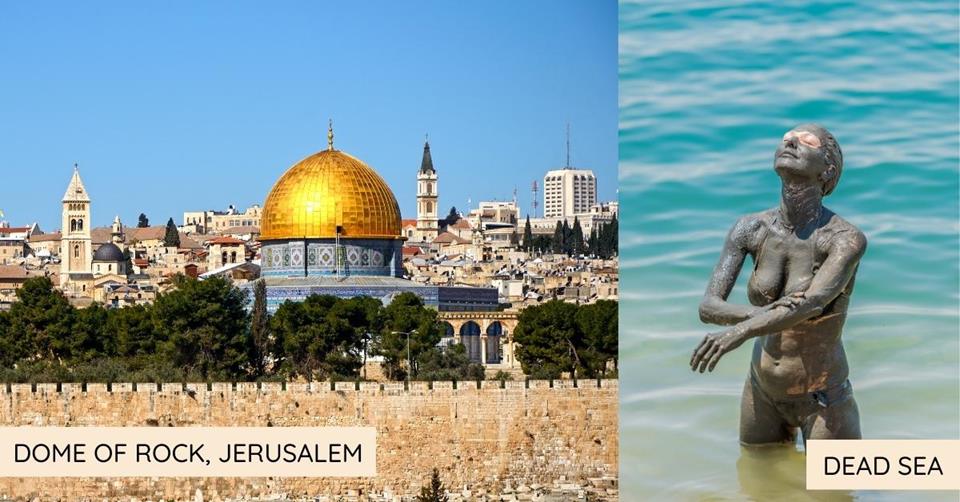
The most popular sites in Israel and Palestine are Jerusalem for its religious value, the Dead Sea, where you could float on the saltiest place on earth and the lowest in elevation, Jericho the oldest city in the world, Bethlehem which is located where Jesus was born, just to name a few.
Here are a few itineraries for 2 weeks in Israel and Palestine:
Itinerary #1: First-time (Tel Aviv, Haifa, Jerusalem, Golan Heights, Eila, Dead Sea)
First-time visitors mostly go to Tel Aviv, Haifa, Jerusalem, Golan Heights, and the Dead Sea. This is a perfect balance of history, culture, and water activities. At the same time, you can also plan a day trip to Bethlehem, Ramallah, and Jericho in Palestine.
In general, you only need three or four major cities as your base. From Tel Aviv, you can go on a day trip to Haifa and all the way to the border to Lebanon. You can plan multiple-day trips from Jerusalem to the Dead Sea, Masada, Bethlehem, and Jericho.
From Golan Heights, stay in Nazareth, but there’s also a day trip to Golan Heights from Tel Aviv. Then Eilat is the place to go to see and dive at the Red Sea.
Tel Aviv for 5 days (day trip to Haifa/Golan Heights)
Tel Aviv pulsates with an energetic urban vibe, famed for its stunning Mediterranean beaches, trendy nightlife, and rich cultural scene. Visit the UNESCO-listed Bauhaus architecture in the White City, soak up the bohemian air in Neve Tzedek, and explore the bustling Carmel Market.
The city’s thriving tech scene has earned it the nickname ‘Silicon Wadi’. Don’t miss the ancient port city of Jaffa, offering a fascinating contrast with its historical charm and picturesque alleyways. Tel Aviv is also home to fantastic restaurants and bars to check out.
You can plan a day trip to Golan Heights and Haifa from here. There are also overnight trips to Petra of Jordan from Tel Aviv. If you come in summer or dry season, make sure to enjoy the beach and maybe go for a surf.

Jerusalem for 6 days (day trip to the Dead Sea)
Jerusalem, the spiritual heart, is a mesmerizing blend of ancient and modern. Whether you’re Jewish, Muslim, or Christian, this is a place that one must visit. Wander through the Old City’s labyrinthine streets, home to key religious sites, including the Western Wall, the Church of the Holy Sepulchre, and Al-Aqsa Mosque.
Explore the vibrant Mahane Yehuda Market, brimming with local flavours. Visit Yad Vashem, Israel’s Holocaust remembrance centre. Experience the Israel Museum’s vast collection, and don’t miss the panoramic view from the Mount of Olives.
There are so many things to do in Jerusalem, 6 days is about right. Make a day trip to Bethlehem, Jericho, Ramallah, and the Dead Sea. Don’t forget the scenic sunrise hike to Masada. You can also do an overnight trip to Jordan from Jerusalem.
Eilat for 3 days
A great way to finish your trip is by heading south to Eilat. It’s known as a diving spot and an overall great spot to enjoy the waters of the Red Sea. Eilat, Israel’s southernmost city, is a sun-drenched paradise on the Red Sea.
It is famous for its azure waters and offers world-class snorkelling and diving at Coral Beach Nature Reserve. Visit the Underwater Observatory Marine Park to glimpse the aquatic world without getting wet. Enjoy hiking, birdwatching, and stunning views in Eilat Mountains Nature Reserve. Dolphin Reef is a must-visit for family fun, allowing interactions with resident dolphins in their natural habitat.
Itinerary #2: Israel and Palestine (Tel Aviv, Jerusalem, Hebron, Ramallah, Bethlehem, Nablus/Hebron)
These two conflicting countries might be a bit too intense as a destination for a vacation. However, for those curious about the current situation and to learn about each country’s culture, making this itinerary for 2 weeks in Israel and Palestine will do the job.
Keep in mind you can simply base yourself either in Jerusalem or Tel Aviv. All the destinations listed here can be reached on a day trip from these two cities.
Tel Aviv for 4 days
Tel Aviv is a vibrant metropolis, boasting a fusion of modernity and timeless tradition. Bask on its sun-soaked Mediterranean beaches and marvel at the White City’s iconic Bauhaus architecture, a UNESCO World Heritage site.
Experience the cultural richness of the Tel Aviv Museum of Art, and wander through the historic neighbourhood of Neve Tzedek. The bustling Carmel Market offers authentic flavours, while the ancient port of Jaffa showcases centuries-old charm juxtaposed against contemporary life.
You can also plan a day trip from Tel Aviv to Nazareth, Golan Heights, and Haifa, and even see the border line between Israel and Lebanon.
Jerusalem for 5 days (day trip to Hebron and Bethlehem)
Jerusalem, a city of profound historical and spiritual significance, offers visitors a memorable experience. Explore the Old City, where the Western Wall, Church of the Holy Sepulchre, and Al-Aqsa Mosque stand as testaments to millennia of faith.
Discover the colourful Mahane Yehuda Market’s culinary delights and the Israel Museum’s unparalleled artefacts. The panoramic views from the Mount of Olives and the solemnity of Yad Vashem are equally unforgettable.
From Jerusalem, you can book plenty of day trips, including to the famous Bethlehem, where Jesus was believed to be born. A trip to Hebron, for your own safety, must be done with a tour group or a guide due to its intense political situation.

Ramallah for 5 days (day trips to Nablus, Jericho)
Ramallah, the de facto capital of the Palestinian territories, offers a unique blend of tradition and modernity. Experience the lively Manara Square, the heart of the city. Explore the Dar Zahran Heritage Building, showcasing Palestinian history and culture.
The tomb of Yasser Arafat stands as a significant modern landmark. The city’s contemporary art scene is at the Al Kasaba Theatre and Cinematheque, and savours traditional Palestinian cuisine in its tasty dishes.
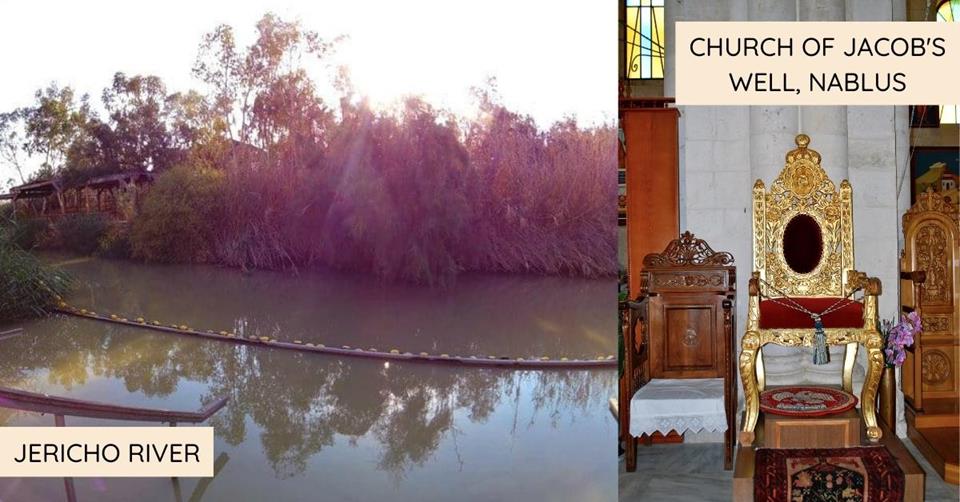
From Ramallah, you can also reach Jericho (the oldest city in the world) and Nabulus, the two most popular spots in the area. In Nablus is where you’ll find “Jacob’s Well”, which is a significant site for Greek Orthodox.
Itinerary #3: Religious Trail and History (Jerusalem, Hebron, Ramallah, Bethlehem, Jericho, Nablus, Nazareth, Sea of Galilee)
For those visiting Israel for purely religious purposes, this itinerary is for you. You’re not the only one coming here for this reason. During my trip, many people were from various faiths whose goal was to not only visit and pray and offer respect to sacred locations in this region.
Jerusalem for 5 days
As we all know, Jerusalem is important for many religions. Whether you’re Jewish, Christian, or Muslim, there’s a reason to visit Jerusalem.
Jerusalem is a spiritual epicentre for Judaism, Christianity, and Islam. The Western Wall, the last remnant of the Second Jewish Temple, draws Jews worldwide.
For the Christians, the Via Dolorosa and the Church of the Holy Sepulchre, mark Jesus’ crucifixion and resurrection sites.
Muslims honour Al-Aqsa Mosque and the Dome of the Rock, where Prophet Muhammad is believed to have ascended to heaven. This city is a famous pilgrimage nexus for multiple faiths.
For people of Christian faith or interested in learning about it, the cities of Bethlehem and Jericho are two main destinations you also want to check out. Which luckily can be booked as a day trip from Jerusalem.
For people practising Islam, you might be curious to visit Ramallah too. At the same time, Hebron is a significant city, especially for Jewish people who are more traditional.
Ramallah for 4 days
Ramallah is an incredible city featuring many Middle Eastern cultures. The local markets are colourful, tasty, and very interesting to visit. Ramallah, in the Palestinian heartland, offers Muslim visitors a blend of modernity and tradition.
While it provides a unique perspective on Palestinian life, its proximity to Jerusalem ensures easy access to the Al-Aqsa Mosque. Within Ramallah, the Maqam of Sheikh Salim Al-Tarifi holds religious significance. Beyond spirituality, the city offers authentic Palestinian cuisine, fun markets, and a taste of contemporary arts.
Nazareth for 4 days
Nazareth, the childhood home of Jesus, holds deep religious significance, especially for Christians. The Basilica of the Annunciation, one of Christianity’s holiest sites, marks where Angel Gabriel announced the birth of Jesus to the Virgin Mary.
St. Joseph’s Church stands over the supposed carpentry workshop of the Holy Family. With its ancient churches, sacred grottoes, and Biblical references, Nazareth offers pilgrims an intimate connection to foundational Christian narratives.
WHAT TO DO AND SEE IN ISRAEL (per city)
Jerusalem
- Church of the Holy Sepulchre
- Dome of the Rock
- Discover the city via a walking tour
- Western Wall
- Day trip to Masada – Masada and Dead Sea only or Masada, Ein Gedi, and Dead Sea
- Join a food tour in the Machaneh Yehudah Market
- Day trip to Bethlehem, Jericho and Jordan River – check out tour details
- The Israel Museum
- Damascus Gate
- Learn the cuisine via a food tour or cooking class
- Day trip to Jericho and Ramallah – visit Bethlehem, Jericho, Qasr el Yahud, and Ramallah
- Party via pub crawl or beer tasting
- Yad Vashem
- Explore the Tower of David/City of David via a full-day tour
- The Garden Tomb
- Day trip to Hebron – explore the Palestinian and Israeli sides of the city
- Gethsemane
- Al-Aqsa Mosque
- Mount of Olives – book a guided tour
Tel Aviv
- Tel Aviv Museum of Art
- Day trip to Nazareth – Nazareth and Sea of Galilee
- Darona Market
- Day trip to Golan Heights – check what’s included
- ANU Museum of the Jewish People
- Day trip to Haifa (including border to Lebanon) – Caesarea, Haifa and Akko
- Carmel Market
- Discover the vegan food scene via a culinary tour
- Tel Aviv Port
- Ben-Gurion House
- Hit the water and try surfing lessons
- Understand the culture through a Street Art & Graffiti Tour
Ramallah
- Arafat Museum
- Mahmoud Darwish Museum
- Dar Zahran Heritage Building
- The Palestinian Museum
Bethlehem
- Church of Nativity – Join a half-day tour or an alternative tour
- Milk Grotto Church
- Join a private tour of St. George’s Monastery, Wadi Qelt, Mar Saba Monastery, and Bethlehem
- Herodion National Park
Nazareth
- Private tour to Nazareth and Galilee – check tour itinerary
- Church Of Annunciation
- The Greek Orthodox Church or Annunciation
- Nazareth Village
- St. Joseph’s Church
- Mount Precipice
- Mary’s Well
- Megiddo National Park
Eilat
- Discover the Eilat Mountains through a Jeep Adventure
- Underwater Observatory Park
- Try Scuba Diving – learn more about this activity
- Eilat Coral Beach Nature Reserve
- Isrotel Theatre Wow Show
- Ice Mall
- Enjoy a jeep tour to Timna Park
- Dolphin Reef Beach
- Dekel Beach
- Mosh Beach
- Camel Ranch
- Join tour and camping activities to Petra and Wadi Rum
- Musical Fountain
- Red Canyon – book a guided tour
LOCAL ISRAELI DISHES AND DRINKS TO TRY

The Middle East is one of the best places when it comes to food. The spices, fresh ingredients, and well-balanced diet are the reasons it’s easily one of the favourites cuisines in the world. Make sure to try at least 3-4 dishes on this list, although I recommend them all:
- Hummus – creamy chickpea dip blended with tahini, lemon, and garlic, often topped with olive oil and served with fresh pita bread
- Falafel – deep-fried chickpea balls, commonly tucked inside pita bread with salads and tahini sauce
- Shawarma – thinly sliced marinated meat (often lamb or chicken), usually served in a pita or laffa wrap
- Sabich – pita sandwich filled with fried eggplant, hard-boiled eggs, hummus, and assorted salads and pickles
- Baba Ganoush – smoky eggplant dip mixed with tahini, olive oil, and various seasonings
- Shakshuka – a spicy dish of poached eggs in tomato, chilli pepper, and onion sauce
- Mansaf – traditional Palestinian dish made of lamb cooked in a sauce of fermented, dried yoghurt, served over rice or bulgur
- Maqluba – traditional one-pot dish with rice, meat (often chicken or lamb), and fried vegetables, which is flipped upside down when served
- Knafeh – sweet cheese pastry soaked in a sugary syrup, typically sprinkled with crushed pistachios and served warm
- Tabbouleh – refreshing salad made from finely chopped parsley, tomatoes, mint, onion, soaked bulgur, and seasoned with olive oil and lemon juice
- Stuffed Grape Leaves (Dolmas) – grape leaves are filled with rice, herbs, and sometimes meat, cooked until tender and often served with a lemony sauce
- Baklava – layers of phyllo pastry filled with chopped nuts (usually walnuts or pistachios) and sweetened with honey or syrup, often flavoured with cinnamon and cardamom
- Halva – dense, sweet confection made from sesame paste (tahini) and sugar, often enriched with flavours like vanilla, chocolate, or pistachio
- Malabi/Muhallebi – creamy milk-based pudding flavoured with rose water and topped with coconut, chopped nuts, and a drizzle of pomegranate syrup or raspberry sauce
BEST PLACES TO STAY IN ISRAEL
Jerusalem
- Affordable: HYVE Jerusalem
- Mid-range: Tzefania Hotel or JERU CAPS HOTEL
- Luxury: De Cardo Hotel or New Citadel Hostel or My Jerusalem View
Tel Aviv
- Affordable:
- Mid-range: WOM Beach Pod Hotel or The O Pod Capsule Hotel
- Luxury: Gia Home or Florentin House or Tel-Aviv LALA Boutique Hotel
Ramallah
- Affordable to Mid-range: Eco Hostel or Ramallah Hostel
- Luxury: Reggenza Hotel or Mizirawi Historic Hotel or Farah Locanda
Nazareth
- Mid-range: Fauzi Azar by Abraham or Al Bishara Guest House or Mary’s Well
- Luxury: Al -Hakim Boutique Hotel or Louis Guesthouse or or Michel House or Legacy Hotel & Convention Center Nazareth
SUMMARY OF 2 WEEKS IN ISRAEL
Choosing Israel as your vacation place might not be the most relaxing trip, but it can be the most educational and spiritual holiday you’ll ever have. There are so many places to visit, food to try, and memories to make.
Luckily, getting around is quite easy, and a trip to Palestine is also possible. Just remember to book your tours, accommodation, and transportation in advance, especially if you plan to visit during peak season (December to January).
I hope that you found this 2 weeks in Israel and Palestine itinerary list helpful in planning your own trip.
TO SAVE THIS ITINERARY, PIN THIS IMAGE BELOW: