
Nepal is one of the most popular destinations located in the Himalayas mountain range. A chance to get close enough to the ceiling of the world. The home of the highest mountain, unique animals, and the home birth of Buddha and Gurkha elite fighters.
Thank you for reading this post, don't forget to subscribe!Being a landlocked country, Nepal’s tourism is driven by trekkers of Everest Mountain. Today, almost 80% of foreign visitors to Nepal come for the mountain. However, if you only have 14 days, can you even go on a trek? Is there something else worth seeing here?
This 2 weeks in Nepal itinerary will answer exactly that. This guide includes travel itineraries for Nepal, covering both trekkers and non-trekkers. I also listed below everything you need to know before you plan and book your trip to Nepal.
CHECK OUT: 2 weeks in India itinerary
THINGS TO KNOW BEFORE VISITING NEPAL
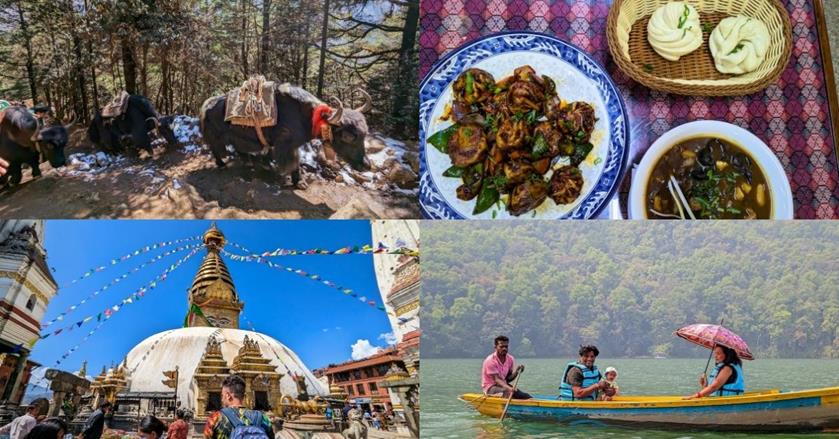
You don’t want to travel halfway across the world just to find out you’re visiting at the wrong time or planning a trip that’s too cramped. Below are answers to basic things you should remember about spending a vacation in Nepal.
When is the best time to go to Nepal
The best time to visit Nepal, particularly for the Everest Base Camp Trek, is during the pre-monsoon season (March to May) or post-monsoon season (late September to November). During these periods, the weather is usually clear, providing stunning views of the Himalayas, and temperatures are moderate, making it ideal for trekking.
It is advisable to avoid the monsoon season (June to early September) when heavy rainfall occurs. Additionally, Nepal doesn’t experience typhoons but the monsoon season brings heavy rain and potential landslides, which is not ideal for outdoor activities.
March to May is also the Everest Base Camp summit season, meaning the window time for people who want to climb Everest Mountain to come to Nepal. During this time, it’s very busy, and many teahouses in the Khumbu region are fully booked. Hence, planning is necessary.
If you plan to trek other trails, you should also know when the best season for that. For example, the summit season for the beautiful Ama Dablam is between October and November, but that’s not the right season to summit Everest Mountain.
Keep in mind that it is very cold in many areas of Nepal during the winter season. Not many hotels in Kathmandu or Pokhara have central heating.
Are 2 weeks enough for Nepal
Well, that depends on what you plan to do. For trekking at Everest Base Camp (EBC) or Annapurna Base Camp (AB), that’s definitely enough, but that’s all you can do. This means that If you plan to go to Chitwan or Pokhara after the EBC trek, that’s impossible.
But if you plan to trek ABC, which is only 7 days, you will have extra time to go to Chitwan and other parts of Nepal.
How to get around
Getting around Nepal can be tricky. Due to being a hilly country in general, flying always comes with a challenge, and it’s not the most affordable. On the other hand, taking the bus is long and very uncomfortable.
Nepal is a developing country, like literally. Many roads are under construction, making road travel super bumpy and taking longer. For example, our bus from Kathmandu to Pokhara was supposed to take 6-7 hours, but because the road was not finished, it took 10-12 hours.
Around the cities, you should install ridesharing and ride-hailing travel apps similar to Uber and Grab. The most popular transportation app in Nepal is Pathao, but you can also try Sahara.
You can pay in cash with these apps. However, it mostly works in Kathmandu only, although it won’t take too long until it’s available for Pokhara and other parts of the country.
Language and currency
Nepali (Nepalese) is the main language in Nepal. However, a large population of the country speaks English well. Around tourist areas such as Kathmandu and Pokhara, you wouldn’t have a hard time communicating with the locals.
The currency here is Nepalese Rupees (NPR). Most transactions are done in cash, but you can pay with your card at tour agencies, hotels, restaurants, and major stores. But it’s vital that you carry cash with you at all times.
There are many ATMs around the country, but most will only allow you to withdraw $70 to $100 (10,000 to 15,000 NPR). Go to the ATM of Nabil Bank, which allows you to withdraw up to 30,000 to 40,000 NPR ($230 to $300) per transaction. This will save you in ATM withdrawal fees.
Visa
Nepal has a very easy tourist visa. It’s one of the very few countries that allow almost all nationalities to enter and travel around Nepal for up to 90 days at a time. However, it’s not free unless you hold a passport from India.
The rest of the world must apply for an evisa before you arrive or get a visa on arrival. You can choose between 15, 30, and 90 days, which costs between $30 to $125. You can extend your visa for a minimum of 15 days for $45, and $3 for additional days after that.
I recommend you get the visa arranged in advance, meaning apply online versus getting it upon arrival.
This is because if you plan to get the visa on arrival, you will have to wait in a queue to use the “visa machine” where you fill in your information and usually, there are only 2-3 machines, which takes a long time.
If you already have one from the online application, you just proceed to the payment booth and be done. Make sure to bring:
- printed or digital copy of your evisa (printed might be better)
- cash in USD, GBP, or Euro (your change will be in NPR)
- no credit card payment
- a passport photo
What is the average cost for 2 weeks in Nepal
A great budget for 14 days in Nepal is around $1000 for a single person. Accommodation and food is cheap. Transportation could cost a bit more than its neighbouring country, but still good range.
If you plan to stay in hostels, you can save even further and bring the budget down to $800 for backpackers. For those planning to stay in high-end hotels, around $2,000 is a good idea for a luxury trip.
Keep in mind that this doesn’t cover your flights to and from Nepal, travel and medical insurance (which is required for treks 5,000 m and above). If you’re booking a trek, best to budget it at $100 per day just to be sure.
Other basic travel tips
Whenever you’re ready to plan your trip, below is a list of great sites to book your hotels, flights, and even insurance. I recommend that you book the hotels in advance. There are lots of accommodations, but the good ones get fully booked early and the mid-range hotels can be at a mediocre level.
PINNED MAP OF TOP THINGS TO SEE IN NEPAL
Click the icon on the top right to enlarge the map. Credit: map data: Google
2 WEEKS IN NEPAL ITINERARY
Nepal offers natural beauty and a rich culture. The country boasts eight of the world’s fourteen 8,000-meter peaks, including Mount Everest, making it a paradise for trekkers and mountaineers.
Temples, stupas, and ancient palaces abound, and festivals colour the streets year-round. The warmth and hospitality of the Nepali people add to the unforgettable experience. Below are the travel itineraries for Nepal, see which one suits you best.
When I decided to take a trip to Nepal, my main objective was to hike the famous Everest Base camp trek. That idea came to me before the pandemic, and I was not able to fulfil that goal until after the international borders had opened.
And once I got there, it was so much better than I imagined. The Nepalese people are super friendly and welcoming, the accommodation is affordable, and there are loads of things to do.
I started my trip in Kathmandu just like everyone else. In this list of itineraries for 2 weeks in Nepal, you can choose between including hiking or without hiking on your travel plan.
Itinerary #1: Trekking the EBC
This itinerary is suitable for those who plan to trek the famous Everest Base Camp. The actual trek actually takes only 11 days, but the 3 extra days are for preparing in Kathmandu at the beginning, a day for getting from Lukla (Khumbu region) back to Kathmandu, and an extra day to prepare for your departure from Kathmandu back home.
We have an in-depth guide for 14 days Everest Base Camp trek which will give you everything you need to know. This includes when to go, what to pack, doing a tour vs not, policies, what to expect, day-to-day expectations, how much to spend, and so much more.

Kathmandu before the trek
Spend a day in Kathmandu after you arrive to gather everything you need. Most people go to rental shops to rent sleeping bags and down jackets. Some people would buy hats, gloves, a duffle bag, and snow pants for the hike.
If you booked a tour, this is also the time you want to say hi to the tour company, get briefed on what time you’re leaving the next day for your flight to Lukla, and discuss what the trek will be like.
You’ll also meet your trekking guide, and if the tour company is generous enough, they will also give you a duffle bag for you to keep. You will meet your porters once you arrive in the Khumbu region (Lukla).
Porters prefer to carry a duffel bag over a hiking backpack. So, if your tour company is not providing one, it’s better to get a duffle bag. It will cost between $15 to $20. Spend this day to get cash as well. Plan around $30 a day if food and lodging are covered on the tour.
If not, it’s best to budget $100 which will cover your accommodation, food, drinks, and snacks. Not to mention payment for your independent tour guide and porter.
Leaving Lukla
Now that your trek is finished, your last day in the Khumbu region is about flying from Lukla and back to Kathmandu. Keep in mind that if you’re travelling during summit season, you might be flying to Manthali/Ramachep instead of Kathmandu due to busy air traffic.
If that’s the case, from Manthali, there’s another 6-hour drive from there to Kathmandu. If you’re on a booked tour, this will be arranged. If not, it’s very important that you arrange this beforehand because Manthali can be a rural area and arranging this last minute can be costly.
Kathmandu after the trek
Spend your last day in Nepal by returning your rented items and buying some souvenirs. This is also the time to arrange how you plan to get to the airport and get debriefed by the tour company.
If you have a few days extra, you should look into walking tours and/or day trips that you can book to maximise your time.
Itinerary #2: Trekking and More (Kathmandu, Chitwan, Pokhara, Annapurna)
This next 2 weeks in Nepal itinerary is perfect for people who want to do some trekking on the stunning Himalayas and also explore other parts of Nepal. For this trek, you will be conquering Anapurna Base Camp, also known as ABC.
Then, you will also get to spend time in Kathmandu, Chitwan National Park, and Pokhara. This itinerary is tight, but with good planning, it can definitely be done.
I also recommend you consider skipping Pokhara, you will be there to get to Annapurna, but expect that you might not have enough time to explore it.

Kathmandu for 2 days
Two days in Kathmandu is not a lot, but don’t worry, you’ll have an extra day at the end of this trip. For the first 2 days, plan to do a walking tour which will maximise your time here by visiting all the must-see spots in the capital city.
Chitwan for 2 days
After Kathmandu, it’s time to head to the famous Chitwan National Park where you can see wild animals such as elephants, Bengal tigers, and rhinoceros. Remember that you must go on a guided tour to Chitwan for your and the animal’s safety.
Avoid riding elephants in Chitwan. This is a common practice, but you have the power to not fuel this activity. Nepal’s neighbouring countries in Southeast Asia have started banning this tourist activity. There is more than one way to enjoy South Asian elephants without being cruel to them.
There are plenty of accommodations outside the national park and getting there from Kathmandu is not a problem. There are lots of buses that will take you, and the travel time is around 5-6 hours or even more if the roads are under construction, and the cost is $6 to $7 (600 to 800 NPR).
Pokhara for 3 days
Pokhara is a great place covered in trees, centred by a lake, and accented by the Himalayan mountains. The only downside here is the smog. During the spring season, the air and humidity in Pokhara can be unbearable. You can’t see the mountains and feel like the air quality is questionable.
This is because the city sits on a valley. Before the typhoon season, the wind blows towards Pokhara. But then due to its location, the wind and pollution from other parts of the country get trapped above Pokhara creating thick smog.
During my visit to Pokhara, the air wasn’t good and I couldn’t see the Annapurna mountain range (but it was hike-able), but I still had a great time. I booked walking tours, went to the lake to rent a row boat, and did whitewater rafting.
You can reach Pokhara from Chitwan via bus. The travel time is around 5-6 hours and the ticket is about 1,000 to 2,000 NPR ($10-$20).
Annapurna Trek for 7 days
Your adventure for Annapurna starts in Pokhara. If you’re going with a tour company, they will be briefing you a day before and arrange the time to pick you up the next day. The trek is for 7 days and there will be multiple ways to get to the Base Camp, which you and your tour guide will be discussing in advance.
Spend a day shopping for other things that you need for the hike such as a sleeping bag, snacks, a pair of gloves, and water tabs.
Depending on your arrangement with the tour company, they will either transport you back to Pokhara or Kathmandu at the end of the trek.
Itinerary #3: No Trek (Kathmandu, Chitwan, Gorkha, Pokhara)
You can surely travel and spend 2 weeks in Nepal without doing any treks. There is more than one way to explore this country and its beauty.
There are lots of people I met in Kathmandu and Pokhara who weren’t doing any hikes and planned their trip around learning about the culture, and people, and admiring the natural beauty.

Kathmandu for 4 days
Travel slowly through the capital city and make sure that you see and explore all the top attractions. Visiting Kathmandu is a melting pot of history and modernity, which means you can learn and experience both the old and new world.
There are lots of ancient ruins and temples that you can visit, but also see how far it has come to modernisation.
The city’s ancient temples and stupas, such as Swayambhunath and Boudhanath, offer spiritual experiences and insights into Buddhism and Hinduism. The lively streets of Thamel are perfect for shopping and savouring local cuisine.
I found this restaurant in the heart of Thamel called Spize (Karnali Organic Thali), which offers traditional Tibetan dishes. I think I ate here so many times during my visit and can’t recommend it enough. My favourite dishes were momo, Mustang chicken, and the lassi.
Chitwan for 3 days
One thing I want you to avoid is riding an elephant. You’ll see that many posters for tourists going to Nepal are of people riding elephants.
Not only are you supporting an unethical and cruel treatment of elephants, but you are also wasting your time. You can still appreciate this anima’s beauty in so many ways when you visit Chitwan.
Visiting Chitwan National Park in Nepal offers an exhilarating escape into the wilderness. As a UNESCO World Heritage Site, it’s renowned for its biodiversity including the endangered one-horned rhinoceros and Bengal tigers.
There is a jungle safari via jeep where you can spot elephants, Bengali tigers, and monkeys.
Gorkha for 3 days
Visiting the Gorkha region in Nepal is an adventure that takes you to the historical roots of the Nepali kingdom. It is famously known as the birthplace of Prithvi Narayan Shah, who unified Nepal.
The iconic Gorkha Durbar is a fortress palace situated on a hilltop, offering panoramic views of the snow-capped Himalayas.
The region is also a gateway to the Manaslu Circuit Trek, but that takes 14 to 18 days. Gorkha is a destination that offers a blend of culture and adventure. Don’t forget to visit the Gorkha Museum as well to learn about Nepal and the Gorkha region.
Gorkha is directly north of Chitwan. There are buses, but they can be limited, so planning in advance is crucial. The driving time is around 3-4 hours and the ticket will cost 500 to 700 NPR ($5 to $7).
Pokhara for 4 days
Pokhara is known for many things including yoga retreats. But if you’re looking for a thrilling activity, don’t miss white water rafting, paragliding with a Himalayas backdrop, hot-air balloon riding, and ATV drives, to name a few.
Don’t miss out on boating around Phewa Lake, which is surrounded by the Annapurna range. It is a nice experience, and you can enjoy the lake and its serene atmosphere. There are plenty of boat rental places all around the lake, and they all have the same price since they’re regulated by the local government.
You can also visit the Peace Pagoda for panoramic views, or explore the mystical Gupteshwor Cave. Pokhara’s laid-back ambience is a perfect contrast to Kathmandu’s hustle.
THINGS TO SEE AND DO IN (per city)
There are so much to do all around Nepal including hiking, city exploration, yoga retreats, and wild animal safaris. There is honestly something for everyone – including cooking classes. I wish I could stay longer, but perhaps that more reason to come back.
Here is a list of things to do during your 2 weeks in Nepal and tours that you can book to make the trip more convinient:
Kathmandu
- Explore Kathmandu – do the UNESCO World Heritage Sites tour or a full-day Kathmandu tour
- Kathmandu Durbar Square
- Narayanhiti Palace Museum
- Do a whole day massage and spa with lunch
- Garden of Dreams
- Ghantaghar
- Pashupatinath Temple and Bodnath Stupa – guided tour
- Shankhadhar Park
- Go white water rafting – read the tour reviews
- Dharahara Tower
- Discover Nepalese cuisine by joining a cooking class in Thamel or sign up to a walking street food tour or a walking food tour at local eateries
- Boudha Stupa
- Pashupatinath Temple
- Sunrise hike to Nagarkot – see the tour details
- Swayambhunath Temple
- Day trip to Nagarkot and Bhaktapur – book your spot
- Bhaktapur Durbar Square
- Half-day tour to Chandragiri to ride the Cable Car – look at the tour price first
- Patan Durbar Square
- Go on a helicopter tour to Everest Base Camp from Kathmandu – either over the air only or including a landing at the base camp
- Amitabha Monastery Hike
- Kakani Hike (viewpoint at Kakani View Tower)
- Phulchowki Temple Hike
- Nagarkot Trail Hike – see the sunrise tour details
- Sundarijal Waterfall
- Shivpuri Nagarjun National Park
Chitwan
Gorkha
Pokhara
- Pewa Lake
- Go paragliding – read the reviews
- Mahendra Cave
- Go Bungee jumping – see the tour price or fly over Sarangkot
- International Mountain Museum
- Davis Falls
- Zip lining – experience the world’s steepest zip-line
- Seti River Gorge
- Explore Nepalese cuisine – join a cooking class
- Pokhara Canyoning
- Visit Tibetan Settlements – either book a full-day or a half-day tour
- Muldhai Viewpoint
- Annapurna – do a day hike to the Australian camp or the Annapurna and Upper Mustang trail
- Ghandruk
- Poon Hill Sunrise Viewpoint – book a 5-day hike for Poon Hill and Ghandruk
- Dhampus View Tower
- Ghorepani Poonhill
- Panchase Hilltop Heliport
- Sarangkot View Tower
Everest Base Camp Trek
- EBC hike 14 days (with food)
- EBC hike 14 days (w/o food)
- EBC helicopter tour (with landing)
- EBC helicopter tour (no landing)
Annapurna Base Camp Trek
MUST-TRY NEPALI DISHES, DRINKS, AND SNACKS

Nepali cuisine is one of the best foods I’ve ever had in Asia. The best way for me to describe it is to compare South Asia with East Asia. You got the curries and also dumplings, it’s all rich in flavour, taste, and colour.
Make sure to try at least 3-4 foods. If you’re hiking, I’m sure you won’t be able to avoid Dal Bhat. Here’s a list of recommended dishes from Nepal:
- Dal Bhat – a staple Nepali meal consisting of lentil soup (dal), rice (bhat), and usually served with vegetable curries and pickles
- Momo – Tibetan-style dumplings filled with meat or vegetables, often served with a spicy dipping sauce
- Gundruk – fermented leafy greens, often served as a soup or a side dish
- Chatamari – a Newari dish, often referred to as Nepali pizza, made from rice flour with meat toppings
- Sekuwa – grilled meat skewers, usually marinated with spices and herbs
- Thukpa – a hearty noodle soup with meat and vegetables, influenced by Tibetan cuisine
- Panipuri/Golgappa/Puchka – a popular street food snack consists of a round, hollow deep-fried crisp bread, which is filled with a mixture of smashed tamarind chutney, chilli, chaat masala, potato, onion, chickpeas or white peas
- Sel Roti – a traditional, sweet, ring-shaped rice bread, common during festivals
- Juju Dhau – A famous creamy yoghurt from Bhaktapur, known as the “King of Yogurts”. It has a rich, creamy texture and a slightly sweet flavour
- Yomari – A Newari dessert made from rice flour dough shaped like a fig and filled with a mixture of molasses and sesame seeds
- Sikarni – a yoghurt-based dessert, mixed with dried fruits, sugar, and spices like cinnamon and cardamom
- Chiya (Nepali tea)
- Lassi – a yoghurt-based drink which can be either sweet or salty
- Tongba (Hot Millet Beer) – A traditional alcoholic beverage made by fermenting millet
- Sherpa Beer
ACCOMMODATIONS
To help you even more with planning your trip, here’s a list of my recommended places to stay in Nepal. There are options depending on your budget and arranged by city.
Kathmandu
- Affordable: Flock Hostel or Shantipur Kathmandu
- Mid-range: Kumari Boutique Hotel or Hotel Jampa
- Luxury: Arushi Boutique Hotel or Hotel Blue Horizon
Chitwan
- Affordable: Chital Lodge or Kasara Resort or Hotel Tree Tops
- Mid-range: Shanta Ghar or Hotel National Park
- Luxury: Hotel Siraichuli or Tiger Tops Tharu Lodge
Gorkha
- Affordable to Mid-range: Universal Hotel & Lodge or Gorkha Garden Hotel
Pokhara
- Affordable: Hotel Cherry Garden or Pokhara Backpackers Hostel
- Mid-range: Bodhi Suites Boutique Hotel & Spa or Hotel Middle Path & Spa
- Luxury: Hotel Portland or Bar Preepal Resort
SUMMARY OF 2 WEEKS IN NEPAL ITINERARY
Spending 14 days in Nepal is an enriching experience that offers so much. From the lofty peaks of the Himalayas to the lush jungles of the Chitwan, the diversity in landscapes is awe-inspiring.
The warm smiles and the hospitality of the Nepali people stay with you long after you leave. Whether it’s the challenge of a trek, the tranquillity of a spiritual retreat, or the thrill of adventure sports, Nepal offers something for every traveller.
I hope that this list of itineraries for 2 weeks in Nepal has been helpful in planning your trip and visualising what to expect.
TO SAVE THIS ITINERARY, PIN THIS IMAGE BELOW:
