
Germany is the first country I visited in Europe after the pandemic. It wasn’t really anything specific, but the first window I had to travel ended up in September. I really missed Europe and I knew that’s where I wanted to go.
Thank you for reading this post, don't forget to subscribe!As I do my research on where to go in Europe in September, I found out that Octoberfest happens in that month (okkkkayyy!). So that settled it, I sat down and did a research on how to spend 2 weeks in Germany.
Germany is one of the largest countries in Europe. It actually has the most countries it borders than any other state in Europe. Denmark in the North, Switzerland, Austria in the South, Czechia, Poland in the East, and the Netherlands, Belgium, Luxembourg, and France in the West.
Germany is well-known for its forested hills, plains, urbanized cities, medieval castles, and picturesque villages.
You’ll find one of the oldest universities and among the crucial European publishing centres. Germany is also a must-visit for its renowned sausages and beers.
In this 2 weeks in Germany article, there are 3 travel itineraries to choose from.
THINGS TO KNOW BEFORE VISITING GERMANY
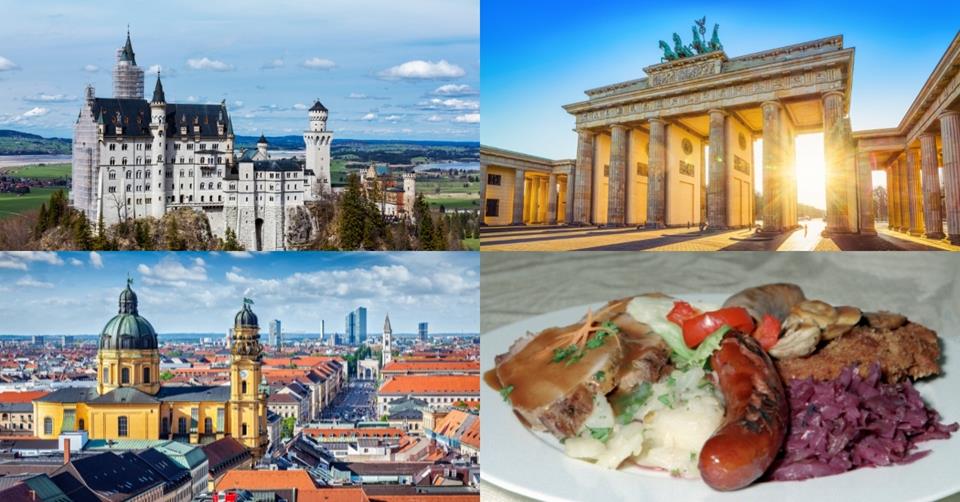
Here are some essential travel tips to make your trip more seamless. The following information should help you plan and write your travel itinerary easier.
From deciding when to go, your preferred mode of transportation, and websites where you can book your accommodation and tours.
This guide on how to plan a vacation to Europe for 2 weeks might also come in handy especially if it’s your first time there.
When is the best time to go to Germany
The summer season is from June to August, the peak season and, ironically, the wettest season. It rains a lot in Germany, so bringing an umbrella and rain jacket with you is brilliant.
Germany is also a fantastic destination during winter where you can enjoy some slopes for skiing if you’re visiting in winter.
There are also lots of Christmas markets you can check out offer traditional German food and souvenirs that you can buy. I wanted the Christmas market, which filled the air with a delicious aroma.
Bring warm clothes if you visit during winter because it gets frigid there. It’s also very dry, so carrying chapstick and hand cream is a great idea. I visited in September and it was already freezing cold.
If you come in spring, don’t forget to go to Bonn, a spring destination. The streets are lined with cherry blossom trees, which are beautiful in spring.
Are two weeks enough for Germany
Being a relatively small country but with fantastic transportation services in place, 14 days in Germany is plenty of time. Of course, it will all depend on how many places you want to see, the time to spend in each location and your chosen transportation.
For 2 weeks in Germany, you could see 3-4 major cities and do day trips in nearby towns. Make a travel itinerary to know how far each place is from one another and how long it will take to travel. This will also help you decide whether to rent a car or take public transportation.
Getting around
Public transportation in Germany, including U-Bahn, S-Bahn, tram, buses, and regional trains, are all fantastic and reliable.
S-Bahn 9city rapid rail is the fastest form of public transport in Germany, while the U-Bahn is an underground train system. Bus and subway tickets are the most affordable options.
If you spend 2 weeks in Germany, renting a car is much more convenient. Although more costly, you will be free of when to go and what time. Most driver’s licenses are valid in Germany, but getting a copy of your international driver’s license is best.
You can pick up your rental car at the airport when you land. You can easily rely on public transport for those who don’t plan to rent a car. Major cities in Germany are connected by trains and buses, which are pretty affordable and comfortable.
There are also domestic flights you can take. It might cost a bit, but a good option if you have limited time. Big cities in Germany also have electric bikes and scooters that you can rent. You can either rent it from your hotel/hostel or go to the metro station to purchase access.
Language and currency
German is the primary language in Germany, but you shouldn’t have a hard time communicating with the locals in English. Here are some words that one could use while on vacation.
- Hallo – hello
- Guten morgen – good morning
- Guten tag – good day
- Guten abend – good evening
- Thank you – danke
Germany uses Euro. 80% of transactions in Germany still use cash. Hence it’s essential to have it with you at all times. You should still be able to pay for the hotel and restaurants using your bank card.
It was indeed surprising to experience that many businesses in Germany prefer that you pay in cash. When you ask for the bill, they will ask you if you are paying in cash or in a card, and once the bill has been printed out, it can be inconvenient for them if you change your mind.
Average cost of a 2-week trip in Germany
The average cost of spending two weeks in Germany is about $1,300 per person, excluding flights to and from Germany.
If you are on a budget, you can budget around $900 if you stay in hostel dorms and take a bus or train.
For people who want to spend a little more and stay in more excellent hotels, $3,500 will allow you to travel comfortably.
Accommodation is the most expensive cost. Transportation and food can be affordable. In comparison, tours cost depend if you want a private tour or don’t mind joining a group tour.
Visa
Germany is part of the Schengen. This means that it implements the same visa policy. Enter Germany with a passport issued by the US, Canada, or most countries in Latin America, Australia, New Zealand, Japan, South Korea, Malaysia, Singapore, and Europe. You can enjoy a visa-free for 90 days in a 180-day calendar.
Visitors from an EU member country have freedom of movement in Germany indefinitely. The rest of the travellers must apply for a visa before travelling to Germany.
Other travel tips
I had to plan my Germany trip way in advance because I wanted to visit during winter when the Christmas market would be open. I want to be close enough downtown that I get to visit as many markets as possible.
The good thing about using the travel sites I like is the fact that they let me cancel at the last minute if I change my mind. I could book the hotel I like, pay a bit less, and still have free emergency cancellations.
If you don’t travel as often as I do, these travel services below will give you many options regardless of your budget. From accommodation, tours, and car rental – many offer a reasonable free cancellation if needed.
PINNED MAP OF MUST-SEE PLACES IN GERMANY
Click the icon on the top right to enlarge the map. Credit: map data: Google
2 WEEKS IN GERMANY ITINERARY
I actually planned a month trip in Europe, 14 days of that was spent in Germany and the other 2 weeks were in Portugal – I thought it was a perfect country combination since Germany offers history and awesome cities, while Portugal is great for food and hiking.
This article has three 2-weels in Germany itineraries, and plenty of travel plans depending on your interest.
For instance, there is an itinerary that caters to those who prefer a more laidback trip, an itinerary for those who want to experience various activities, and an itinerary that features the most famous German attractions.
There’s also no pressure to follow these itineraries. These are just suggestions that you could either completely follow or not. Depending on your mood, budget, and other factors, you can also mix and match various locations.
Itinerary #1: Berlin, Nuremberg, Munich, Frankfurt
The first itinerary for those planning to vacation for two weeks in Germany includes Frankfurt, Munich, Berlin, and Nuremberg locations.
This itinerary is most suitable for people who want to learn about Germany’s history and culture. This itinerary will take you through a time machine by visiting historical sites.
These locations are perfect for those who want to take a breather when they travel and prefer to opt out of back-to-back adrenaline-filled activities. However, there’s also a city that adventurous people or nature lovers might enjoy, Munich, due to its Alpine region.
Berlin for 4 days
Berlin is perfect for visitors who want to have a cultural immersion. The capital of Germany is filled with museums, historic sights, and local food, plus a vibrant night scene. In fact, Berlin is the party capital of Europe.
This city is the ideal starting point when travelling because it is connected to many cities, including Hamburg and Dresden, where you could also avail yourself of guided day tours. Another famous day tour destination from Berlin is Potsdam.
Nuremberg for 3 days
Nuremberg is the second largest city in the state of Bavaria. It has culture-filled architecture and medieval buildings, including churches, castles, rivers, bridges, and even its streets. Since this city is a thousand years old, it will be perfect for people who appreciate historical sights and structures.
There are several ways to reach Nuremberg from Berlin, including the train, driving, riding a bus, or flying. The most recommended option would be to ride the train, which takes about 3 hours.

Munich for 4 days
A lot of people say that Munich embodies the best of Bavaria. It has laidback cafes, cosmopolitan city life, world-famous beer halls, and Alpine areas, so it can basically accommodate any type of traveller.
If you are laidback, you could sightsee and stay in one of their cosy cafes or boisterous beer halls.
For nature enthusiasts, it has an Alpine area region where you can hike and take in the sights thousands of feet above ground level. The Old Town Munich is such a melting pot and a must-see location. You can join a walking tour that lasts for 2-3 hours and learn a lot about this Bavarian capital.
The most recommended option to reach Munich if you’re coming from Nuremberg is by train; the journey takes just over an hour. It is operated by Deutsche Bahn Intercity-Express and Deutsche Bahn Regional. You can also take the bus for a cheaper cost if you are on a budget.
Frankfurt for 3 days
Frankfurt is most well-known for its ethereal skyline, famous galleries, museums, and historic cathedrals. This city is most suitable for those who appreciate historical sites. Aside from taking a stroll, you could also opt to take a cruise in downtown Frankfurt to see it from another perspective.
If you’re coming from Munich, some of the options to reach Frankfurt include riding the train via Neustadt. This is the most recommended choice, about a 3-hour journey. The cheapest option is to ride a bus. Another alternative option is to drive.
Frankfurt is an incredible city to finish your 2 weeks in Germany because the airport is big enough to host international flights to North America, Asia, Africa, and Latin America.
Itinerary #2: Munich, Berlin, Hamburg
For those who are staying for 14 days in Germany, this second itinerary is ideal for people who are fond of nightlife and attending various events.
This is an ideal 2 weeks in Germany itinerary for those who want to travel slowly and visit the most popular spots in the country.
One more great thing about this itinerary is the inclusion of Cologne. It is near to other equally mesmerizing places, such as Essen, Dusseldorf, and Dortmund. You could take day trips from Cologne to those cities.
Munich for 4 days
I was unsure if I should start in Berlin or Munich, but eventually went with the later one since I found a shorter flight and more affordable that landed there. I’m happy I did because Berlin was so much colder and the locals of Munich were a bit more welcoming (in my opinion).
Another reason to visit Munich is because of the live performances. For people who want to witness a show-stopping experience, head over to Schubecks Teatro, where you could have a meal and watch a cabaret-cum-circus simultaneously.
Munich is a perfect starting point for travel because aside from the city’s charms, you can also have day trips to multiple places, including Nuremberg, Neuschwanstein Castle, Salzburg, and Rothenberg ob der Tauber.
Berlin for 4 days
You must visit Berlin at least once in your lifetime because it is a city celebrated for its creativity, culture, and overall grunge feel. Berlin has tons of green spaces, such as public parks and gardens.
Some of the best brands and DJs flock to this city to perform as well, so if you’re looking for a vibin’ night out with your companions. This is the perfect place for you.
To reach Berlin, if you’re in Munich, the transportation options include the train, which is quite comfortable
You can also take the more affordable bus. Driving is another option for those who rent a car or board a flight. The most recommended option is to ride the train, which could last up to four hours, and the cheapest option is to ride a bus.
Hamburg for 4 days
This city is perfect for those fond of bodies of water as it is close to two seas and has three rivers.
It is even referenced as Venice of the North but with more bridges. In fact, it has six times more than Venice, and since it is close to the waters, its fish and seafood’s freshness is comparable to none.
You could go to Hamburg from Berlin by train, using Rideshare, riding the bus, driving or flying. The most recommended option would be to ride the plane with a travel duration of around 1 hour and 50 minutes.

Itinerary #3: Berlin, Dresden, Nuremberg, Munich, Frankfurt, Hamburg
This itinerary is perfect for people who want to experience a little bit of everything. You could taste local delicacies, see well-preserved historical sights, watch a football match, spend time in nature with the cities’ green parks, and enjoy music.
There’s even a city that’s very family-friendly if you have kids with you. The schedule seems tight, but it is still possible with enough planning during your 2 weeks in Germany.
Berlin for 3 days
Berlin is also a haven for foodies because it has incredible local food, the most famous of which is currywurst. The city also has a vibrant Turkish community reflected in the food it serves. Berlin has mouth-watering kebabs and other delicacies.
And to pair with your food, they have pints upon pints of beer. Berlin is surely the beer capital of the world. Beer enthusiasts will enjoy the immensely wild variety of craft beers there.
Dresden for 2 days
Dresden is one of the cities that was most affected by WWII. Almost 85% of the city was bombed, but now it has been restored. Now, people can see remnants of the old town before the war and learn more about Germany differently.
The most recommended mode of transportation to reach Dresden if you’re coming from Berlin is the train, with a travel duration of around 1 hour and 50 minutes. The cheapest option is to use Rideshare; the alternative options are riding the bus or driving.
Nuremberg for 2 days
Nuremberg isn’t only perfect for couples or groups of friends travelling. It is also family-friendly. Aside from the historical places, it also has culinary delights that everyone can enjoy.
Nuremberg also has lakes where you and your family can stroll or cycle around. You can try pedal boat rides and sailing trips as well. Nuremberg is where the beautiful Imperial Castle of Nuremberg is located – truly embodies the traditional Bavarian houses.
The most recommended mode of transportation from Dresden to Nuremberg is by train, which has a travel duration of around 3 hours and 50 minutes and covers 424 km. You can also take a bus which is more cost-effective.
Munich for 3 days
If you are an active and nature lover, Munich is the perfect place for you. You can soak in its fantastic views by riding cable cars or climbing Zugspitze, the highest mountain in the country.
And, of course, speaking of being active, football enthusiasts shouldn’t forget to visit FC Bayern Munich’s stadium, Allianz Arena, and watch a game or two.
To go to Munich from Nuremberg, you could board a train, take the bus, or drive. The most recommended option is by train, which would take you around more than an hour to reach your destination.
Frankfurt for 2 days
Who doesn’t love food-related festivals, right? Frankfurt has a green sauce festival every May, the season when the herbs are freshest.
There’s also this debate on where Frankfurt hotdogs come from. Is it from Frankfurt, Germany or Vienna, Austria? Regardless, you have to try frankfurter paired with tasty mustard (which comes in many flavours in Germany).
Aside from that, they also have a museum festival, apple wine festival, and jazz zum dritten, among others. It also has a remarkably well-preserved old town for history buffs and the main tower, which is Frankfurt’s highest vantage point.
To reach Frankfurt from Munich, people usually board the train or fly. It would take you almost 3 hours to reach your destination. Although taking the bus is also an option.
Hamburg for 2 days
Hamburg has been a must-see destination for music lovers worldwide since the opening of the Elbphilharmonie Concert Hall in 2017. Aside from that, it also has around 100 music venues and clubs. It is considered one of the biggest musical cities in the world.
You could reach Hamburg from Frankfurt by flying, which is the most recommended option. Travel time lasts for almost 2 hours. However, you can also book a train ride or take the bus for a more affordable option.
THINGS TO SEE AND DO IN GERMANY

The list below will help you plan your trip. Make sure to open up a map and add pins on each place to have a visual of where are the attractions you want to see and from there, plan your ideal 2 weeks in Germany itinerary.
I personally mixed booking guided tours and doing DIY. I remember going to this tower in Old Town Munich as a viewpoint, but I got there late in the afternoon, it was foggy and couldn’t see anything. Luckily, it was only €5, so I came back the next day and did it again.
I wouldn’t say that booked tours or guided/group tours in Germany are more costly than in other parts of Europe such as Spain or Italy. It was about the same and if you visit during off-seaon, lots of them are on sale too.
Berlin
- Explore on your own and get a hop-on,hop-off bus ticket – see the price
- Museum Island
- Discover Berlin – join a walking tour or a specific Third Reich WWII tour or a street art tour
- The Berlin Wall Memorial
- Berlin’s Television Tower – get your skip-the-link ticket
- Checkpoint Charlie Museum
- Sachsenhausen Concentration Camp – book an affordable tour
- Charlottenburg Palace and Park
- Illusion Museum (Illuseum) – read the reviews
- Gendarmenmarkt
- Plenary Chamber, Dome, and Government District – can be done in one tour
- Jewish Museum
- Berlin Cathedral Church
- Berlin Icebar – open all year-round
- Berlin Zoological Gardens
- Sign up for a food tour and/or pub crawl
- Berlin-Dahlem Botanical Garden and Botanical Museum – visit the Botanical Garden during Christmas
Munich
- Explore Munich – sign up for the Third Reich WWII tour or a spooky evening tour
- Marienplatz and the Neues Rathaus
- English Garden
- The Olympic Park
- Neuschwanstein Castle and Linderhof Palace – book a full-day tour
- BMW Museum
- Viktualienmarkt – join a food tour around the market or a Bavarian dinner and drinks
- Cuvillies Theater
- TimeRide VR Time Travel – read the reviews
- Salzburg day trip tour
- Dachau Concentration Camp Memorial Site – get there by train
- Allianz Arena
- Day trip to Rothenburg and Nordlinger Ries – beautiful medieval towns and houses, book a tour
- Day trip to Salzburg – birthplace of Mozart, join a tour and take the train

Frankfurt
- Get your Frankfurt Card that allows you to use transportation and enter attractions for free
- Museumsufer
- Frankfurt River – sign up for a cruise
- Goethe House and Museum
- Scavenger Hunt – city tour, self-guided tour
- Romerberg
- Discover nightlife and join a pub crawl
- Palmengarten
- Eiserner Steg
- Old Sachsenhausen
- Schirn Kunsthalle
- Day trip to Heidelberg – it’s not too far, so it should only be a half-day tour
- Escheimer Turm
- Day trip to Rhine Valley – including a cruise
- Klassikstadt
- Day trip to Baden-Baden, Black Forest, and Strasbourg – check the schedule and price
- There’s a 7-day tour around Central Europe that leaves in Frankfurt – check the price and itinerary
Hamburg
- Explore Hamburg on your own – get a hop-on, hop-off bus tour
- Miniatur Wunderland
- Port of Hamburg – day cruise or night cruise
- Hamburger Kunsthalle
- Hamburg Dungeon – book your admission ticket in advance
- International Maritime Museum
- Reeperbahn and St. Pauli – sign up for the famous Insider Tour or join an adults-only tour
- Alster Lakes
- Hamburg Red District – Olivia Jones tour with Fabian
- Museum of Art and Design
- Elbphilharmonie – join a guided tour
- Planten un Blomen and Wallringpark
- Listen to St James Church’s historic organ
- Tierpark Hagenbeck
Cologne, Essen, Dortmund, Dusseldorf
- Old Town Cologne – walking tour or a street art tour
- Essen Minster
- Rhine River Cruise – book a boat tour
- Ruhr Museum
- Cologne Chocolate Museum – get your ticket in advance
- Alter Markt and Altes Stadhaus
- Westfalenpark
- German Football Museum
- Brewery Tour – Klösch Tastings
- Konigsallee
- Comedy Tour Bus – a unique way to learn about Cologne, read the reviews
- Dusseldorf-Kaiserwerth
- Sign up for a food tour
Dresden
- Get the Dresden hop-on, hop-off bus ticket
- Dresden Frauenkirche
- Semperoper and Old Town – combo tour
- Dresden Royal Palace and Museums
- Semper Opera and Theaterplatz – book a guided tour
- Bruhl’s Terrace
- Dresden Kulturpalast
- Elbe Cruises on a Paddle Wheeler – there’s a river cruise
- Saxon Switzerland
- Dresden Zwinger – gala concert
- Moritzburg Palace
- Lantern Night Watchman – read the tour reviews
- Meissen day trip
- The Georgentor and the Procession of Princes
MUST-TRY GERMAN DISHES, DRINKS, AND SNACKS

I’m not going to lie, I didn’t enjoy the food that much in Germany, but that’s because I don’t like the taste of pork. However, chicken schnitzel was so good and apfelstrudel was worth every sugar. I’m not a big beer drinker, but if there’s one beer I could drink forever, it would be Weizenbier (wheat beer).
Don’t leave Germany without trying these local dishes and excellent drinks. You shouldn’t have difficulty finding these traditional foods regardless of the season.
- Schnitzel – Breaded and fried veal, pork, or chicken cutlet.
- Bratwurst – Grilled sausage, often served with sauerkraut and mustard.
- Sauerkraut – Fermented cabbage, typically served as a side dish.
- Currywurst – Sliced sausage with curry ketchup and curry powder.
- Sauerbraten – Marinated and roasted beef, often served with potatoes and red cabbage.
- Kartoffelsalat – Potato salad, made with boiled potatoes, onions, and a vinegar-based dressing.
- Rouladen – Thinly sliced beef rolled with onions, bacon, and mustard, then braised.
- Königsberger Klopse – Meatballs made from ground pork or veal, served in a creamy caper sauce.
- Kartoffelsuppe – Potato soup, often flavored with bacon or sausage.
- Spätzle – Soft egg noodles, served as a side dish or with gravy.
- Black Forest Cake (Schwarzwälder Kirschtorte) – Layers of chocolate cake with cherries and whipped cream.
- Apfelstrudel – Apple strudel, made with thin layers of pastry filled with spiced apples and raisins.
- Bienenstich – “Bee sting” cake, featuring a layer of cream or custard between two layers of yeast dough, topped with caramelized almonds.
- Beer (Bier) – Germany is famous for its beer, with a wide variety of styles including Pilsner, Weizenbier (wheat beer), and Märzen.
- Glühwein – Mulled wine, often enjoyed during the winter months, especially at Christmas markets.
- Apfelschorle – A refreshing drink made with sparkling water and apple juice, popular for its crisp taste.
ACCOMMODATIONS IN GERMANY
Hotels in Germany are pricey, there’s just no going around about it. But, I managed to score some good-priced hotels. Well, I can’t take all the credit but travelling in September (low season), really paid off.
I also booked a private room in a hostel, which is more affordable than the usual hotels. Plus, since I planned this trip 4 months in advance, I had the time to hunt some good deals.
Here’s a list of places you can stay in Germany depending on your budget:
Berlin
- Affordable: a&o Berlin Hauptbahnhof or Ballhaus Berlin Hostel or New Hostel Berlin Mitte
- Mid-range: Living Hotel Großer Kurfürst or NH Collection Berline Mitte
- Luxury: Steigenberger Hotel Am Kanzleramt or Berlin Marriott Hotel
Munich
- Affordable: 1st Creatif Hotel Elephant or The 4YOU Hostel
- Mid-range: Hotel Jedermann or Hotel Demas City
- Luxury: Hotel Torbrau or Eden Hotel Wolff or Hotel Mirabell
Frankfurt
- Affordable: Hotel Scala or Hotel Miramar am Romer
- Mid-range: Motel One or Ruby Louise Hotel
- Luxury: Sofitel Opera or Hilton Hotel
Hamburg
- Affordable: MAC City Hostel or CAB20 or Superbude Hotel
- Mid-range: Hotel Fürst Bismarck or JUFA Hotel
- Luxury: The Westin or AMERON Hotel or Motel One
Dusseldorf
- Affordable: a&o Dusseldorf or B&B Hotel
- Mid-range: Leonardo Hotel or Holiday Inn Express
- Luxury: The Niu Tab or Clayton Hotel or Carahotel
Cologne
- Affordable: Pathpoint Cologne Hostel or Hotel Berg
- Mid-range: Urban Loft or Hotel Domblick Garni
- Luxury: Marriott Hotel or Prevot Restaurant and Hotel or The Qvest Hideaway
Dresden
- Mid-range: Hotel Elbflorenz or ibis Budget Hotel or Altstadtwohnung TOP
- Luxury: Hotel Indigo or Schiffsherberge Poppelmann
Nuremberg
- Affordable: a&o Nurnberg Hauptbanhof
- Mid-range: B&B Hotel or Hotel-Gasthof Bub or Hotel Continental
- Luxury: Best Western Hotel or Hotel Elch or Melter Hotel & Apartments
SUMMARY OF 2 WEEKS IN GERMANY
Germany is filled with incredible architecture, glamorous events, exciting nightlife, beautiful scenery, and lively festivals.
You could take river cruises, day trips, or attend music and film festivals, as well as the world-famous Oktoberfest, which originated here. Whatever you fancy, you could probably find it in Germany.
This country is also well-known for its cultural diversity. You’ll experience various languages and cultures from Nigerian, Tunisian, Polish, and Turkish roots in Germany.
It’s straightforward to get around in Germany as their trains are always on time and have a vast rail network. Christmas markets are abundant during the holiday season, so visiting Germany has various perks, no matter what season.
TO SAVE THIS ITINERARY, PIN THIS IMAGE BELOW:
