
Southeast Asia is my favourite destination when it comes to affordability. There’s so much to see and do for a lot less. I once travelled around Vietnam for 2 weeks spending just $600.
Thank you for reading this post, don't forget to subscribe!In Europe, you need at least $50 a night just for the accommodation. In Southeast Asia, that’s basically your budget for an entire day.
Of course, today, popular destinations such as Indonesia and Thailand are becoming a bit more expensive, but it’s still affordable enough to really stretch out your budget.
Our post of 2 weeks in Southeast Asia got a little too long. So, we decided to move this section to a separate post to make it easier to read and access.
In this article, you will learn about how to put together a Southeast Asia trip planner. The information here includes when to go, language, transportation, visa, budget, and choosing which countries to visit.
BASIC TRAVEL INFORMATION FOR SOUTHEAST ASIA
These are the only basic things you should remember before booking anything. If you plan to do something very specific, I recommend reading more to ensure you are not visiting during bad timing or the wrong season.
Choosing where to go
Personally, I would start in Thailand first. This country is so popular for tourists to the point that getting around is much easier.
But if you want to visit two countries, Thailand and Cambodia are great combos or Thailand and Malaysia.
One thing that you should remember when choosing where to go in Southeast Asia is either sticking to one country or choosing two countries where it’s easy to get from country 1 to country 2.
To give you some ideas:
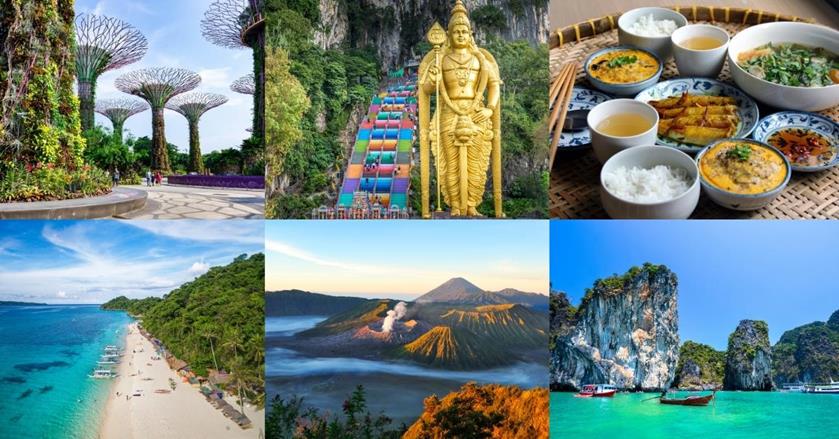
- Thailand – first-time in Southeast Asia, amazing beaches, fantastic water activities, great food
- Vietnam – interesting history, great food, super affordable, hiking options, easy to get around, motorbiking adventure
- Cambodia – you can use USD, motorbiking adventure, Angkor Wat is here
- Laos – the most affordable, off-the-beaten-path, backpacker’s heaven
- Malaysia – English speaking, balance between modern cities and strong culture, easy visa
- Indonesia – Bali is here, lots of hiking around active volcanoes, 17K islands to explore, surfing
- Singapore – easy to get around, English speaking, the entire country can be done in 4 days, good food, not so affordable, easy visa, expensive destination
- Philippines – English speaking, 7K islands, hiking trails, diving and surfing, easy visa
- Timor-Leste – challenging to get around but perfect for those who prefer that
- Brunei – located in Borneo, can easily spend 4 days here and see everything, a bit pricey
- Myanmar – interesting history, well-intact culture, but currently under civil war

When is the best time to travel to Southeast Asia
Although Southeast Asian countries are pretty close to each other, the seasons can’t be any more different.
For example, Vietnam actually has a winter season if you are visiting the northern region, while the typhoon season in the Philippines and Thailand is a bit different.
November to February is a good time to visit Southeast Asia. It’s drier, cooler, and has less chance of rain – it’s the perfect time for hiking and doing water activities.
However, in the north of Thailand and Vietnam, these months could be colder than expected, and the visibility in the mountains could be poor.
Are 2 weeks enough for Southeast Asia
Two weeks can be a decent amount of time for a Southeast Asia trip, depending on your travel style and priorities. With careful planning and prioritising of destinations, you can visit a few countries and experience some of the highlights of the region.
However, keep in mind that Southeast Asia is a vast and diverse region with many unique cultures and attractions, so two weeks may feel rushed for those who want to explore more extensively. Plus, travelling between countries can vary from a bus ride to taking a one to 3-hour flight.
You can probably visit 1-2 countries in Southeast Asia in under 14 days if they’re near one another. A good example of this is Vietnam and Cambodia or Thailand and Cambodia.
But, many capital cities in Southeast Asia have direct flights, making it easy to spend one week in one country and the second week in another country. The bottom line is to plan to see 3-4 cities when making your travel itinerary.
Which countries are sharing land borders
Some destinations in Southeast Asia are the best combination on a single journey. Countries like Malaysia, Singapore, Vietnam, Myanmar, Cambodia, and Laos have land border points, and backpackers suggest getting the best out of these border-crossing relationships.
Crossing the land borders can also lessen the expense and save you time at the same time.
I spent two weeks between Singapore and Malaysia, but I also spent 2 weeks in Thailand and Cambodia. I crossed the land border for both trips. On the other hand, my 2 weeks in the Philippines and Indonesia were via non-stop flight.
How to get around
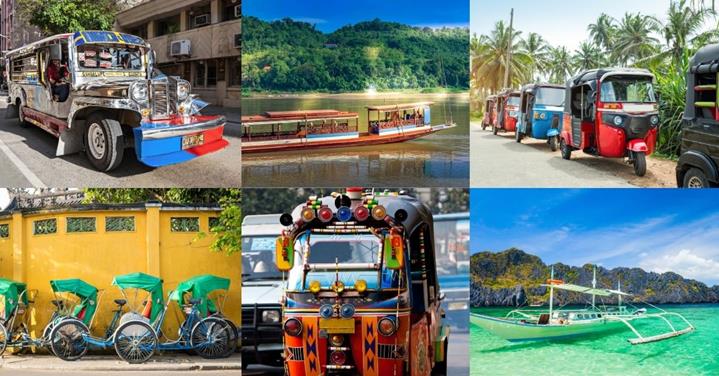
There’s not really one answer except – using the Grab or Gojek app. These are ride-hailing apps like Uber or Lyft. These apps offer rides for cars, taxis, and even motorbike taxis in this region.
Grab and Gojek apps work in almost any major city in Southeast Asia, except in Laos, Myanmar, Brunei, and Timor Leste.
There are also other apps like Bee, inDriver, Angkas, etc – but not all these apps work in the entire region of Southeast Asia.
Buses are the cheapest way to get around, while domestic flying is also pretty good, and flight tickets are affordable. There are usually taxis but beware of drivers who will tap their meter to get your fare higher.
Countries like Vietnam, Thailand, and the Philippines have some short and long-distance train systems. Singapore has a fantastic metro system throughout the country.
Language and currency
Languages and currencies in Southeast Asia vary from country to country. However, getting your USD, GBP, AUD, and CAD converted to the local currency is easy. With the exception of Cambodia.
Cambodia uses USD and Cambodian Riel. You can pay with these currencies pretty much anywhere (in cash). The ATM will even dispense USD, but if you pay $1 for a $.50 worth of an item, you won’t get a chance (not even in Riel).
There are ATMs in all major cities and airports and payment with the card has been taking off, but cash is still king in Southeast Asia. You might be able to pay for your hotel with your card, while the rest will be in cash.
English is widely spoken in the Philippines, Singapore, Malaysia, and Indonesia, while these countries also have their own main languages (Tagalog, Malay, Mandarin, and Bahasa Indonesia).
In Vietnam, Thailand, and Cambodia – if you are in big cities, it’s easy to get by with English. Most younger locals can communicate well in English.
It’s also helpful to download the local languages on your Google Translate app. It’s not the best, but it’s surprisingly helpful.
Southeast Asia trip budget for 2 weeks
The budget for Southeast for 14 days can vary a lot. Although this region is generally affordable, the prices of services such as accommodation, transportation, and tours are very different for each country.
Your budget will depend on the places you want to see. For example, Singapore costs almost the same as Europe or North America. But Vietnam, Laos, and Indonesia offer super affordable accommodations.
To give you some ideas: On average, around $700 to $900 is a decent budget for 2 weeks in Southeast Asia for one person. This includes mid-range accommodation, transportation, a tour, and okay food.
You can go on a shoestring backpacker budget of $500 to $700, but that means staying in a shared dorm room, booking a standard tour, eating street food, and most likely booking a bus for transport instead of flying or taking the train.
For honeymooners or luxury travellers, $1,500 to $2,500 is an extraordinary budget that allows you to stay in comfortable hotels or resorts, comfortable transportation, and high-end restaurants.
Visa
Each country has different visa policies. Some allow most European, North and Latin America, and neighbouring countries to enter visa-free or for a small fee. Here’s a quick summary of visa requirements in Southeast Asia:
- Brunei – visa-free for 14 to 90 days
- Cambodia – secure your visa in advance, valid for 30-90 days
- Indonesia – apply for an eVoa valid for 30-90 days
- Laos – visa on arrival or evisa for 30 days
- Malaysia – visa-free for 30-90 days
- Myanmar – must get an evisa for 90 days
- Philippines – you get 30 days visa-free
- Singapore – no need for a visa for 30 days
- Timor Leste/East Timor – visa-free or visa-on-arrival for 30 days
- Thailand – at least 30 days visa-free
- Vietnam – apply for an evisa valid for 30 or 90 days
Travel arrangement tips
For those who enjoy planning a trip in advance, make sure to book your hotel at least 3 months prior to arrival especially if visiting in December and during the Lunar New Year.
Domestic flights, buses, and trains can be booked last minute as long as you’re not visiting during Christmas, New Year’s, or Lunar New Year (peak season).
LOCAL SOUTHEAST ASIA DISHES AND DRINKS TO TRY

Southeast Asia is just an awesome destination when it comes to dishes. Not to mention that they are so affordable. Here are some food and drinks that you must try while travelling around Southeast Asia:
Southeast Asia offers a vibrant and diverse culinary scene. Here are some must-try dishes, desserts, and drinks from the region:
Dishes:
- Pad Thai (Thailand) – Stir-fried rice noodles with shrimp or chicken, tofu, bean sprouts, peanuts, and a tangy tamarind sauce.
- Pho (Vietnam) – A fragrant noodle soup with beef or chicken, herbs, and a clear broth.
- Nasi Goreng (Indonesia) – Fried rice with kecap manis (sweet soy sauce), shrimp, chicken, and a fried egg on top.
- Adobo (Philippines) – A savoury stew of chicken or pork marinated in vinegar, soy sauce, garlic, and bay leaves.
- Laksa (Malaysia/Singapore) – A spicy noodle soup with coconut milk, shrimp, and fish cakes.
- Green Curry (Thailand) – A rich, spicy coconut milk curry with chicken or beef, eggplant, and Thai basil.
- Rendang (Indonesia/Malaysia) – A slow-cooked beef stew with coconut milk and a blend of aromatic spices.
- Amok Trey (Cambodia) – Fish curry steamed in banana leaves with coconut milk and a blend of spices.
- Banh Mi (Vietnam) – A crispy baguette sandwich filled with pork, pate, pickled vegetables, and fresh herbs.
- Satay (Indonesia/Malaysia) – Skewered and grilled meat served with a rich peanut sauce.
- Som Tum (Thailand) – A spicy green papaya salad with lime, fish sauce, peanuts, and chillies.
- Khao Soi (Thailand) – A creamy coconut curry noodle soup with chicken or beef, topped with crispy noodles.
Desserts:
- Mango Sticky Rice (Thailand) – Sweet sticky rice served with ripe mango and drizzled with coconut milk.
- Chè (Vietnam) – A variety of sweet soups or puddings made with beans, fruit, and coconut milk.
- Kuih (Malaysia) – Bite-sized colourful cakes made from rice flour, coconut milk, and pandan.
- Halo-Halo (Philippines) – A shaved ice dessert with a mix of sweetened beans, and fruits, and topped with leche flan.
- Dadar Gulung (Indonesia) – Green pandan crepes filled with sweet coconut and palm sugar.
- Tub Tim Grob (Thailand) – Crunchy water chestnuts in sweetened coconut milk with ice.
Drinks:
- Thai Iced Tea (Thailand) – A sweet, creamy tea made with black tea, sugar, and condensed milk.
- Vietnamese Iced Coffee (Vietnam) – Strong coffee brewed with a drip filter, mixed with sweetened condensed milk, and served over ice.
- Teh Tarik (Malaysia) – A hot milk tea beverage, known for its unique “pulling” preparation method.
- Buko Juice (Philippines) – Fresh coconut water served straight from the coconut.
- Bandung (Malaysia) – A rose syrup drink mixed with condensed milk, served cold.
- Es Cendol (Indonesia) – A cold dessert drink made from coconut milk, palm sugar syrup, and green rice flour jelly.
SUMMARY OF SOUTHEAST ASIA PLANNER
Southeast Asia is a must-visit at least once in your lifetime. With the amazing activities it has to offer, the diverse culture, and the super friendly locals, it’s definitely a gem of a region.
While there are a lot of things to do and visit in Southeast Asia, don’t feel overwhelmed in deciding where and how to travel around it.
Since you have a limited time right now, focus on one of two countries first or even just one. Then if you like it, you can visit again and discover a new destination.
I hope that you found this Southeast Asia trip planner helpful.